
CASE STUDY · CARINGBRIDGE

OVERVIEW
ROLE
Product Designer
SCOPE
iOS UX, interaction design, accessibility
PARTNERS
Product, engineering, external design, QA
THE CHALLENGE
01 — Reduce friction in creating and sharing updates
02 — Create navigation that feels calm and predictable
03 — Improve readability and support assistive technology
04 — Bring warmth and reassurance to key interactions
DESIGN APPROACH
MOBILE-FIRST FLOWS
I simplified content hierarchy and placed high-frequency actions where users needed them most, reducing unnecessary steps in core tasks.
SUPPORTIVE INTERACTIONS
Gentle guidance, clear feedback, and predictable states helped the product feel less clinical and more human.
ACCESSIBLE BY DEFAULT
I designed for readable hierarchy, scalable type, and assistive technology so every user could participate with confidence.
CROSS-FUNCTIONAL DELIVERY
Close collaboration with product and engineering translated design intent into durable, implementation-ready patterns.
PROCESS
Before redesigning screens, we identified the biggest pain points. We reviewed existing app flows, support feedback, product requests, missing mobile functionality, Apple’s Human Interface Guidelines, and the places where web and mobile experiences diverged. This made it clear where modernization would have the greatest impact.
The redesign wasn’t just visual. We rebuilt interaction patterns throughout the app by simplifying navigation, improving hierarchy, increasing accessibility, updating typography, introducing modern spacing and layouts, and creating reusable UI components. Every decision aimed to make the experience feel intuitive and familiar to iOS users.
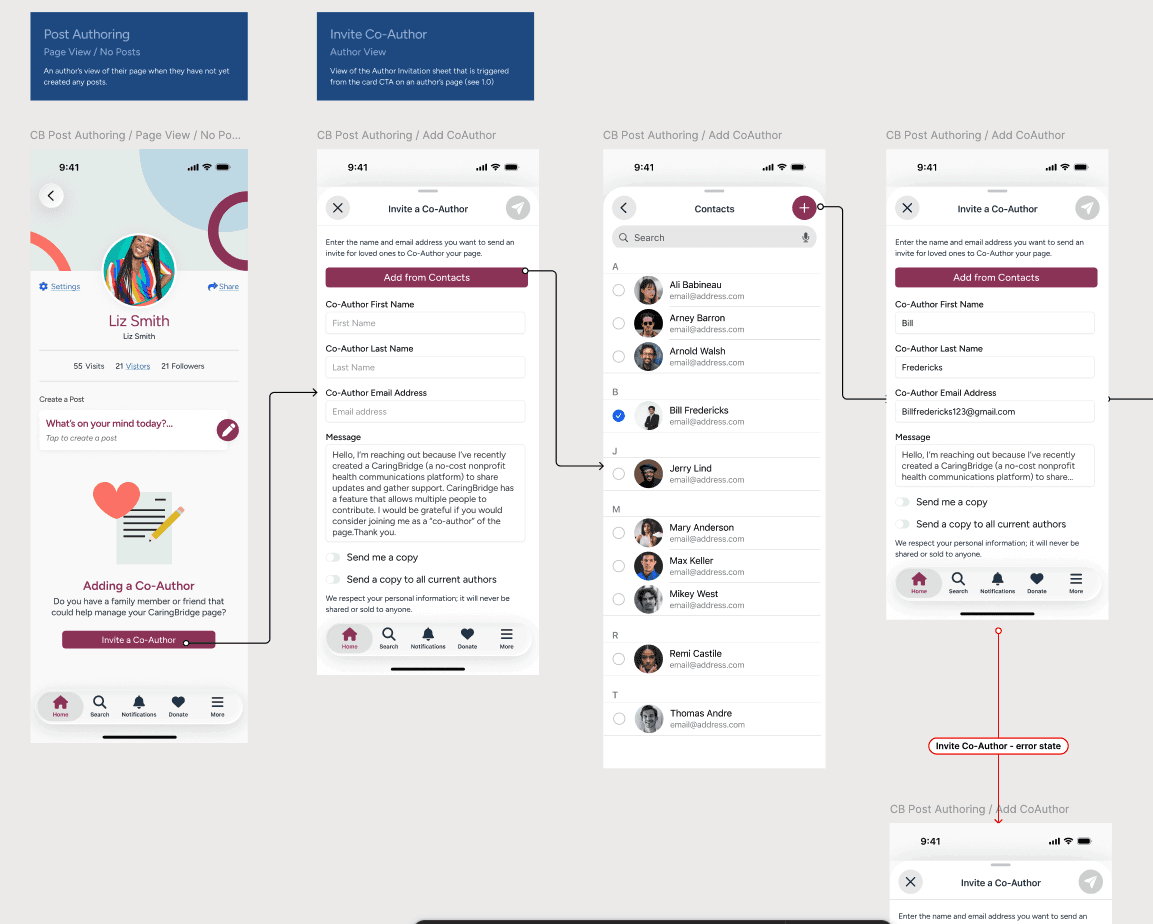
A major initiative after the redesign was feature parity. Working closely with product and engineering, I adapted web-only capabilities—including Ways to Help, Support Requests, improved sharing, visitor engagement, notifications, following experiences, and author management—for native mobile behavior rather than simply copying the web experience.
Following launch, redesign became an ongoing process rather than a one-time release. I regularly conducted usability studies, tested prototypes, gathered stakeholder feedback, partnered with engineering, and refined existing experiences based on user behavior. This allowed the product to keep improving instead of treating redesign as a single milestone.

OUTCOMES & REFLECTION